
Power Grid Instability and Lightning: Why Early 2026 Will Bring More Surges to Texas Properties
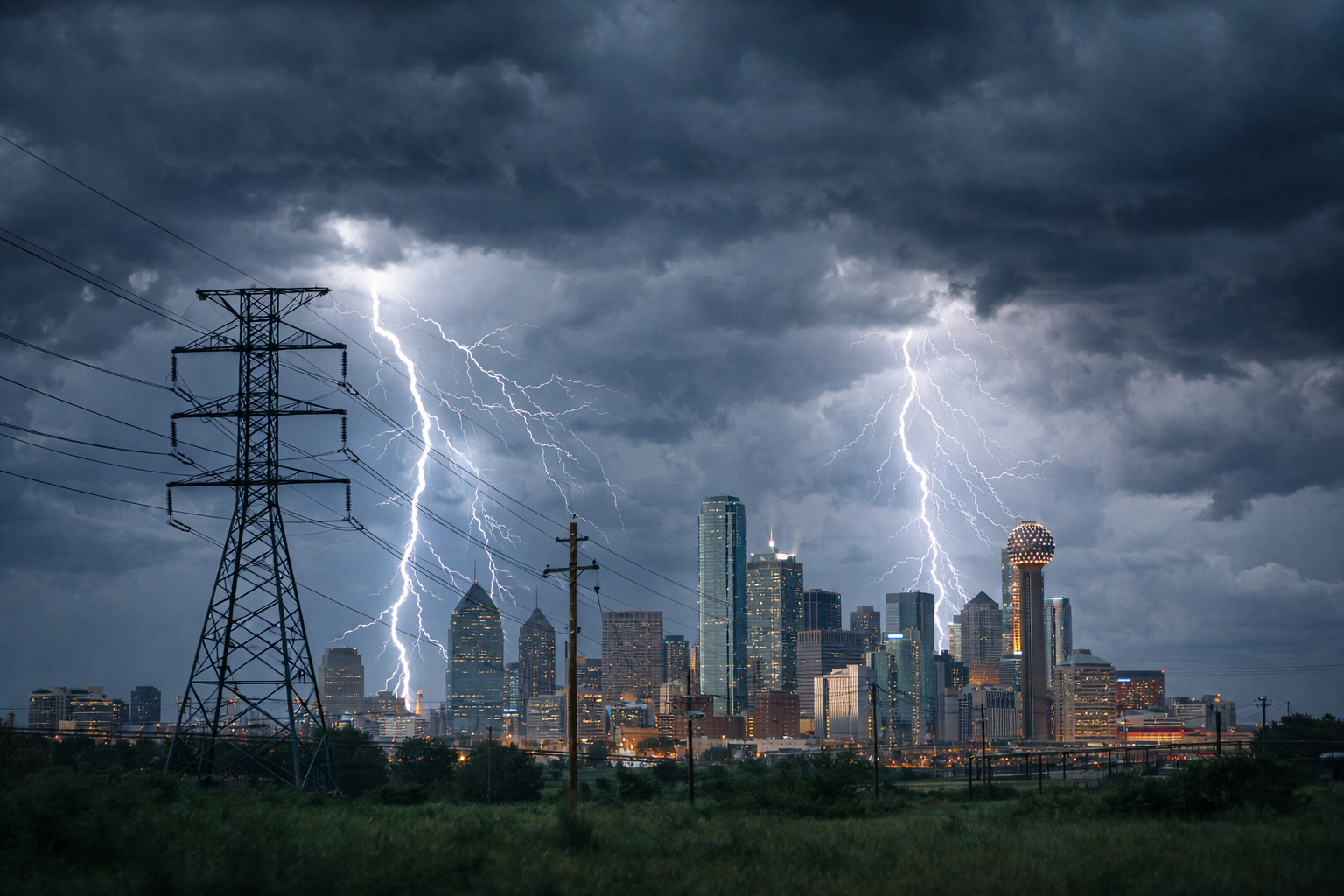
Texas homeowners and businesses are facing a growing electrical threat that many don’t see coming. While lightning strikes remain a major risk, power grid instability is now amplifying the damage lightning causes, especially during winter storms and extreme weather events.
Forecasts from ERCOT and NOAA indicate that early 2026 will bring elevated risk of electrical surges, driven by grid stress, rapid power cycling, and severe storm activity across the state.
Lightning no longer needs to strike a building directly to cause catastrophic electrical damage.

Why the Texas Power Grid Is Under Increasing Stress
Texas operates one of the most independent power grids in the United States. While this offers flexibility, it also means the system is highly sensitive to extreme weather.
ERCOT’s seasonal reliability assessments highlight several ongoing challenges:
- Rapid temperature swings
- Winter storms and ice events
- High demand during cold snaps
- Aging infrastructure
- Increased reliance on electronic controls
Power grids are most vulnerable during extreme weather, exactly when lightning and storms are most active.
When the grid is stressed, voltage irregularities become more frequent. These fluctuations create ideal conditions for destructive surges.
How Lightning and Grid Instability Combine to Create Surges
Lightning introduces massive electrical energy into the environment. When that energy interacts with a stressed power grid, the results can be far more destructive than a typical strike.
Surges can enter a property through:
- Utility power lines
- Underground service connections
- Internet and communication lines
- Cable and satellite systems
- Solar arrays and EV chargers
Grid instability turns lightning events into surge multipliers.
Even distant lightning strikes can cause damaging surges when the grid is already unstable.
Why Early 2026 Is a High-Risk Period
Winter storms in Texas create unique surge conditions:
- Ice and wind damage power lines
- Rapid on-off power cycling
- Emergency grid load balancing
- Voltage spikes during restoration
NOAA and ERCOT modeling suggest that early 2026 will see increased winter storm activity, especially across North and Central Texas.
Many of the most expensive surge losses occur during winter storms, not summer lightning events.
These surges often damage equipment quietly, leading to delayed failures weeks or months later.
What Surges Actually Destroy Inside Homes and Buildings
Surges don’t always cause visible damage, but they degrade systems internally.
Common surge-damaged components include:
- HVAC control boards
- Furnaces and heat pumps
- Pool automation systems
- Refrigerators and appliances
- Smart home hubs
- Security and camera systems
- Commercial automation panels
- Networking equipment
Most surge damage is cumulative, not instantaneous.
Repeated smaller surges weaken electronics until they fail unexpectedly.
Why Traditional Surge Strips Are Not Enough
Many property owners rely on plug-in surge strips, believing they offer sufficient protection. Unfortunately, these devices:
- Only protect individual outlets
- Do not protect HVAC or hard-wired systems
- Cannot handle large surge events
- Degrade over time
Whole-home and facility-level surge protection is the only effective defense against grid-level surge events.
Proper surge protection must be installed at the electrical service entrance and bonded correctly to grounding systems.
How Surge Protection and Lightning Protection Work Together
Lightning protection and surge protection are complementary systems.
- Lightning protection prevents structural fires and safely redirects strikes
- Surge protection protects internal electrical and electronic systems
Lightning protection stops fires. Surge protection stops system destruction.
When installed together, these systems dramatically reduce both immediate and long-term damage.
What Property Owners Should Do Before Winter Storm Season
Preparation now can prevent thousands, or hundreds of thousands, in damage later.
Recommended steps include:
- Electrical service surge protection installation
- Bonding of communication and utility lines
- Grounding system inspection
- Lightning protection system evaluation
- Post-storm system inspections
Surge protection is no longer optional in high-risk grid environments.
Why Insurance Coverage Is Becoming More Complicated
Insurance carriers increasingly differentiate between unavoidable damage and preventable electrical loss.
Surge-related claims may face:
- Partial coverage
- High deductibles
- Denials for “preventable damage”
- Equipment depreciation disputes
Documented surge protection can help reduce claim disputes and losses.
Texas’s power grid instability combined with increasing lightning activity is creating a surge environment unlike anything seen in the past. Early 2026 is expected to bring heightened risk, especially during winter storms.
Surge damage is often silent, cumulative, and expensive. But it is also highly preventable.
Protect your home or business now, before grid stress and storms expose costly vulnerabilities.
GET A FREE QUOTE TODAY
References
- ERCOT — Seasonal Grid Reliability Assessments | https://www.ercot.com
- NOAA — Severe Weather & Storm Modeling | https://www.weather.gov
- IEEE — Surge Protection Research | https://ieeexplore.ieee.org
- Insurance Information Institute — Electrical Surge Loss Data | https://www.iii.org
- Vaisala — Lightning Activity Reports | https://www.vaisala.com
Share:
The Real Cost of Lightning Strikes in Texas: 2025 Data Breakdown
Texas Storm Season 2026 Forecast: What Homeowners and Businesses Need to Do Now